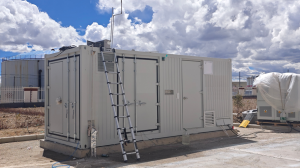
Hydrogen Solutions for Low-Carbon Transition: Fuel Cell Systems and Electrolyzers
The Practical Case for Hydrogen
Hydrogen is gaining traction as a complementary energy carrier in the decarbonization effort. While renewable electricity capacity expands rapidly, intermittency and seasonal storage remain unresolved for many grids. Hard-to-abate sectors—heavy industry, long-haul freight, and high-reliability backup power—cannot be fully electrified with today’s battery economics. Hydrogen addresses these gaps with its ability to be stored over months, transported via pipelines, and converted back to electricity with only water vapor as exhaust. The global hydrogen market is projected to grow at roughly 20% CAGR over the next decade, driven by policy support, technology readiness, and falling renewable power costs. For engineering and business teams, hydrogen has moved from theory to project evaluation.
Role in the Energy System
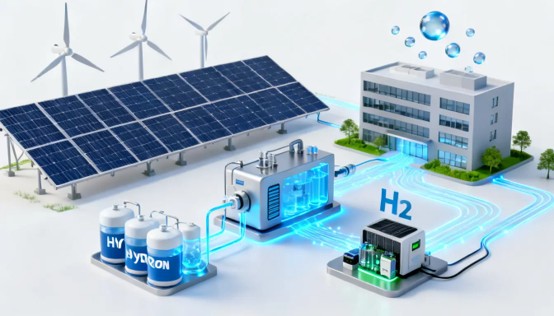
Batteries perform well for short-duration regulation but face limitations in energy density and self-discharge for long-duration or seasonal storage. Hydrogen storage is essentially lossless over months and leverages existing natural gas pipeline infrastructure for blending or dedicated transport. Producing hydrogen during periods of excess renewable generation and using it during peak demand or low-wind/solar periods reduces curtailment and improves grid asset utilization. This makes hydrogen a structural complement to wind and solar, not a competitor.
Core Technologies: Electrolyzers and Fuel Cells
Electrolysis (ALK and AEM)
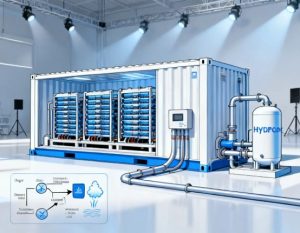
Alkaline (ALK) electrolysis is the most mature technology, with over a century of industrial operation. Systems reach 60–70% efficiency (LHV basis), handle megawatt-scale currents, and have lower capital costs—suitable for steady, large-scale production. Anion Exchange Membrane (AEM) electrolysis is newer, using a solid polymer membrane that enables faster load-following, higher current density, and a more compact footprint. This makes AEM attractive for distributed, on-site generation paired with variable renewable sources. Both chemistries benefit from production capacity expansion; green hydrogen production costs are expected to reach USD 2–3/kg by 2030 in regions with low-cost renewables.
Fuel Cells
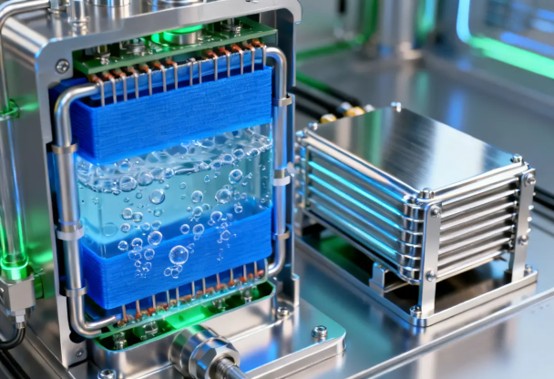
Proton Exchange Membrane (PEM) fuel cells dominate stationary and mobile applications due to low operating temperature, quick start-up, and high power density. Single stacks range from 1 kW to several hundred kW, with modular scaling to MW-class systems. Electrical efficiency is 45–55%, and combined heat and power (CHP) raises overall utilization to ~85%. Modern PEM stacks are rated for >40,000 operating hours, with proper maintenance extending to 50,000–60,000 hours. No combustion occurs, resulting in low noise, low vibration, and zero NOx/particulate emissions.
Application: Backup Power for Offices, Data Centers, and Factories
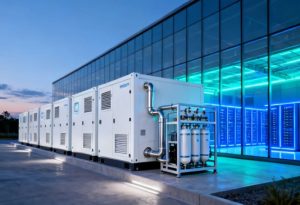
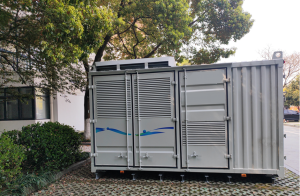
Diesel generators remain common but impose noise, emissions, fuel storage risks, and frequent maintenance. Hydrogen fuel cell backup units reach full power in under one minute, synchronize automatically with facility electrical systems, and provide runtime extension simply by adding hydrogen storage modules. For data centers where downtime costs are severe, this reliability is critical.
In factory settings, CHP configurations deliver both electricity and process heat (drying, curing, space heating) simultaneously, improving overall project economics and shortening payback by several years compared to power-only systems. Facilities already handling industrial gases often have appropriate safety protocols in place. Office complexes can deploy rooftop or basement fuel cells to reduce demand charges and participate in grid services. New commercial buildings increasingly include hydrogen-ready infrastructure as a standard feature.
Commercial Vehicle Powertrains
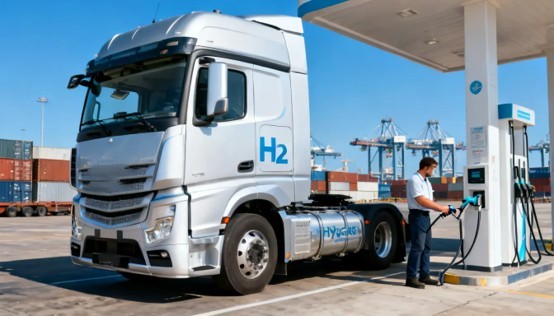
Heavy trucks, buses, and delivery fleets require range, fast refueling, and payload capacity. Fuel cell electric vehicles (FCEVs) achieve 400–800 km range with, with refueling in 5–15 minutes. Power output remains consistent regardless of payload—an advantage over battery-electric in variable-load operations. Regional distribution, port logistics, and municipal bus routes are initial deployment niches.
Total cost of ownership (TCO) is approaching parity with diesel when factoring fuel costs, reduced maintenance (no oil changes, no aftertreatment systems), and purchase incentives. As green hydrogen prices fall toward USD 2/kg, TCO parity is projected within 5–8 years for most duty cycles. Zero-emission fleets also gain access to low-emission zones and preferential procurement terms in several markets.
Cost Outlook: LCOH and Grid Parity
Levelized cost of green hydrogen depends on electricity price, electrolyzer capex, utilization rate, and O&M. From USD 6–8/kg in 2015, it now ranges USD 3–5/kg in favorable regions, and is forecast to reach USD 2–3/kg by 2030. At ~USD 2/kg, fuel cell power generation becomes competitive with grid electricity above ~USD 0.15/kWh—commonly referred to as grid parity. Carbon pricing (e.g., EU ETS at €80–100/tCO₂) adds further economic advantage. Fuel cell systems can also generate revenue from frequency regulation and voltage support ancillary services.
Industrial Decarbonization: Steel and Cement
Steel and cement together account for ~15% of CO₂ emissions. Hydrogen-based direct reduction (H₂-DRI) replaces blast furnaces, cutting steelmaking emissions by up to 95%. A 1-million-tonne-per-year steel plant requires roughly 100,000 tonnes of green hydrogen annually—equivalent to several GW of electrolyzer capacity. Cement kilns exceeding 1,400°C can be fired with hydrogen, reducing fuel-related emissions by 40–60% (process CO₂ from limestone calcination remains and requires CCS). Glass, aluminum, and chemicals share similar high-temperature heat requirements. Co-locating electrolysis, storage, and industrial users in clusters optimizes infrastructure cost and hydrogen dispatch.
Company Capabilities and Service Scope
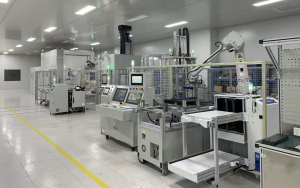
Shanghai Mingzheng Technology Co., Ltd. has nearly two decades of manufacturing experience in clean energy equipment, holding ISO 9001 and ISO 14001 certifications. Its product portfolio includes fuel cell assembly lines, stack test benches, environmental chambers (temperature/humidity cycling, salt spray, vibration), and complete fuel cell power systems and commercial vehicle powertrains. The company provides end-to-end services: site assessment, load profiling, hydrogen sourcing strategy, system integration, installation, commissioning, and operator training. Its engineering team maintains field data across diverse industrial environments, enabling thermal, control, and durability optimization for specific customer operating conditions. Detailed product specifications and case studies are available via the “Solutions” and “Fuel Cell Equipment” sections of the company website.
Frequently Asked Questions (FAQ)
Q: What exactly are hydrogen solutions for low-carbon applications?
A: They comprise electrolyzers for green hydrogen production, storage and distribution infrastructure, fuel cells for power/heat generation, and vehicle powertrains. The objective is to replace fossil fuels in sectors not easily electrified.
Q: How to choose between ALK and AEM electrolyzers?
A: ALK is mature, lower-cost, and suited for steady, large-scale output. AEM responds faster to variable power input and has a smaller footprint—better for distributed or renewable-coupled projects. Selection depends on scale, power source, space, and load profile.
Q: Can fuel cells truly replace diesel generators for backup?
A: Yes, in terms of startup speed, quiet operation, zero emissions, and lower maintenance. Runtime can be extended with additional hydrogen storage. Higher upfront cost is offset by lower lifetime fuel and O&M expenses, especially with carbon pricing.
Q: Are indoor fuel cell installations safe?
A: With proper ventilation, leak detection, and hydrogen storage in dedicated enclosures, fuel cells are safe for indoor commercial use. There is no open flame; safety features include automatic shutoff, pressure relief, and continuous gas monitoring—meeting international certification standards.
Q: What is the current LCOH of green hydrogen and when will it reach grid parity?
A: Currently USD 3–8/kg depending on electricity costs. By 2030, USD 2–3/kg is widely expected, at which point fuel cell power competes with retail grid rates above USD 0.15/kWh, though actual parity varies by region and carbon price.
Q: What is the major maintenance interval for fuel cell systems?
A: Design life exceeds 40,000 hours (4–5 years continuous full load). With proper water quality, filter changes, and thermal/voltage checks, many systems reach 50,000–60,000 hours before stack replacement. Stack replacement costs are decreasing with scale.
Q: How much can hydrogen reduce steel and cement emissions?
A: Steel: up to 95% via H₂-DRI. Cement: 40–60% reduction in fuel-related emissions (process CO₂ remains). Both industries are piloting commercial-scale projects with roadmaps for significant hydrogen adoption by 2035.
Q: Are FCEV commercial vehicles cost-competitive with diesel today?
A: Purchase price remains higher, but TCO is approaching parity when fuel, maintenance, and incentives are considered. Full TCO parity is expected within 5–8 years as hydrogen prices fall to USD 2/kg.
Q: How does your company support hydrogen system adoption?
A: We provide consultation, system design, manufacturing, factory testing, installation, commissioning, training, and remote monitoring. We also supply production and test equipment for fuel cell manufacturing and quality validation.