
From process design, equipment manufacturing, installation and commissioning to personnel training, providing worry-free service throughout the entire process.
Providing 24/7 technical support.
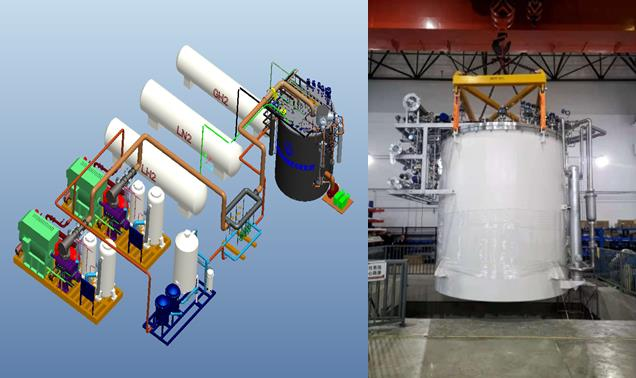
Lorem ipsum dolor sit amet, consectetur adipiscing elit.
The system directly converts the chemical energy of a fuel (typically hydrogen) and an oxidant (typically oxygen from the air) into electricity through an electrochemical reaction. The process primarily produces water, heat, and minimal other emissions.
Key advantages include: high power generation efficiency (typically 40%-60%), with total efficiency exceeding 90% in combined heat and power (CHP) mode; quiet operation with low noise levels; zero carbon emissions (when using pure hydrogen); and modular design for flexible deployment.
Safety is a primary design principle. Measures include strict hydrogen leakage monitoring, active and passive explosion-proof design (e.g., Ex d IIC certification), flame-retardant materials, anti-static design, and multiple automatic safety shutdown mechanisms.
The design life varies by type and application. Stationary power systems are often designed for tens of thousands of hours of operation, e.g., exceeding 40,000 to 80,000 hours. The lifespan of core components, like the stack, is a critical factor.
Maintenance requirements are relatively low. Key tasks involve regular inspection of air filters, the cooling system, and scheduled preventive maintenance (such as stack inspection/replacement after certain operating hours) based on the system design. High automation enables remote monitoring.
Yes, many modern systems are designed with cold-start capability. For instance, they can successfully start and reach usable power within minutes at temperatures as low as -25°C or even -30°C with auxiliary measures.
Yes. Systems can be configured for either off-grid (standalone) or grid-connected operation. Grid connection requires additional grid-tie inverters and control systems to synchronize with the grid's voltage and frequency and ensure safety.
Yes. A significant application is Combined Heat and Power (CHP), where the heat generated by the reaction is captured for space heating or hot water, dramatically increasing overall energy efficiency. Some systems can also produce purified water.
The initial capital cost is typically higher than traditional generators. However, high operational efficiency, relatively low maintenance needs, and long service life contribute to lower long-term costs. Costs are continuously decreasing with technological maturity and mass production. Operating cost is largely dependent on fuel (hydrogen) price.

Building 6, No. 286 Tianjiu Road, Songjiang District, Shanghai, China